The Corporate Hierarchy Is Dying. Intelligence Is the New Hierarchy

For decades, the corporate ladder operated on a fairly predictable principle: experience earned seniority, seniority earned authority, and authority gave you influence over people, information and decisions.
Artificial intelligence is beginning to challenge that arrangement.
Consider a marketing director with 20 years of experience who manages a team of ten. One relatively junior employee learns to use AI to analyse customer behaviour, research competitors, develop strategies and automate campaign reporting.
Within months, that employee may possess analytical capabilities that previously required an entire department.
The director still holds the authority. But who now possesses the greater capacity to create value?
This is the uncomfortable question corporate leaders must confront. The organisational hierarchy and the intelligence hierarchy are beginning to separate.
I believe companies will increasingly need to organise themselves around intelligence, capability and measurable contribution rather than relying predominantly on position, tenure and traditional authority.
This is not an argument for replacing experienced leaders with younger, AI-savvy employees. It is about recognising that intelligence is becoming more accessible, scalable and economically valuable.
And that changes the rules for everyone.
The Corporate Ladder Was Built Around Scarcity
Traditional corporate structures made sense when information was difficult to access, specialist knowledge was expensive and decision-making depended heavily on accumulated experience.
Senior executives possessed information unavailable to junior employees. Managers interpreted that information, distributed instructions and coordinated execution.
The higher you climbed, the greater your access to knowledge and organisational resources.
AI is weakening that advantage.
An employee can now research unfamiliar markets, analyse financial information, evaluate commercial scenarios and develop recommendations without waiting for several departments to contribute.
Of course, generating an answer is not the same as understanding it. AI makes mistakes, lacks organisational context and can produce convincing nonsense.
Nevertheless, it dramatically expands what a capable individual can attempt.
When intelligence becomes more accessible, authority based primarily on controlling information loses much of its justification.
The implications extend beyond productivity. They challenge how businesses recruit, promote, reward and manage people.
The Smartest Person May Not Be Your Most Senior Employee
One of the more interesting developments is that AI adoption does not necessarily follow corporate reporting lines.
McKinsey's 2025 research revealed a significant disconnect. C-suite executives estimated that 4% of employees used generative AI for at least 30% of their daily work. Employees reported 13%.
In other words, employees were using AI extensively at more than three times the rate executives estimated.
That finding should concern leaders. It suggests that meaningful changes in workforce capability may be happening without management fully understanding them.
Imagine two financial analysts with identical qualifications and responsibilities.
One prepares monthly reports using spreadsheets and established processes. The other uses AI to investigate anomalies, automate reconciliations, model scenarios and identify emerging financial risks.
Both occupy the same position. Their contribution could be substantially different.
Now imagine the second analyst reports to a manager who cannot interrogate their methods or evaluate their recommendations.
The manager has positional authority. The employee may possess superior analytical capacity.
That creates an unfamiliar management challenge.
The organisation must still establish whether the employee's work is accurate, secure and commercially sound. Yet the manager cannot simply rely on seniority as proof of superior expertise.
Your Job Title Is Becoming a Weaker Form of Career Insurance
PwC's 2026 Global AI Jobs Barometer, analysing more than one billion job advertisements, provides evidence of changing workforce economics.
Jobs requiring specific AI skills grew by 69%, compared with 9% growth across the broader jobs market. PwC also identified an average 62% wage premium for workers with AI skills in comparable roles.
Perhaps more revealing, junior roles highly exposed to AI were seven times more likely to require traditionally senior capabilities, including judgement and leadership, than less AI-exposed junior roles.
The market is beginning to reward capabilities differently.
That creates particular pressure for professionals whose value depends heavily on routine analysis, reporting, coordination or controlling access to information.
Consider middle management.
Many managers spend considerable time preparing reports, tracking activities, distributing information and escalating decisions. AI-enabled systems can increasingly perform portions of that work.
Companies will still need managers. But they may need fewer people whose principal contribution is moving information between organisational layers.
A management title cannot permanently justify a salary if technology and better-designed workflows eliminate much of the work supporting that position.
This does not mean experience becomes irrelevant.
An experienced professional who combines sound judgement, industry knowledge and AI capability may become exceptionally valuable.
The danger lies in assuming yesterday's expertise guarantees tomorrow's relevance.
Managers Must Learn to Lead People Who Outperform Them
The traditional expectation that a manager should know more than their employees has always been questionable.
AI makes it increasingly impractical.
Microsoft's 2025 Work Trend Index found that 28% of managers were considering hiring AI workforce managers, while 32% planned to hire AI agent specialists.
Microsoft describes the emerging employee who delegates work to AI agents as an agent boss.
Think about what this means for management.
A relatively junior professional could coordinate specialised agents responsible for research, analysis, reporting and workflow execution. Their manager might have considerably more experience but less practical command of these capabilities.
That manager faces a choice.
They can regard the employee's growing capability as a threat, restrict experimentation and protect established processes.
Or they can develop sufficient understanding to evaluate the work, provide commercial context and help extend its impact.
The second response creates value. The first protects a position.
Managers should be assessed partly on how much capability they develop and mobilise, not merely how many people report to them.
This requires confidence, curiosity and humility.
A leader does not need to possess every specialist skill. They must understand enough to ask difficult questions, recognise poor reasoning and make accountable decisions.
Managing increasingly capable people is not a loss of authority. It is a more demanding form of leadership.
The Real Threat Is Intelligence Asymmetry
I use the term intelligence asymmetry to describe the difference in effective capability between people who combine their expertise with AI and those who do not.
It can exist between two employees, competing departments or businesses operating in the same market.
Consider two sales managers.
One relies on historical reports, personal experience and weekly pipeline meetings.
The other combines those practices with AI-supported customer analysis, forecasting, opportunity scoring and automated follow-ups.
The second manager does not automatically become better. Poor data and weak judgement can make sophisticated tools dangerous.
But when both managers possess comparable commercial understanding, the second may gain a substantial advantage.
Over time, these differences can accumulate.
For employees, the practical response is to examine how AI could improve the quality and commercial impact of their work.
For employers, the responsibility is broader. They must ensure capability is developed across the organisation rather than concentrated among a handful of enthusiastic employees.
Otherwise, companies risk creating a workforce where intelligence advances faster than the structures responsible for managing it.
The Corporate Org Chart Needs a Different Logic
Most organisational charts tell us who reports to whom.
They reveal remarkably little about where the company's strongest problem-solving capabilities reside.
A business might have an excellent customer analyst in finance, an exceptional process designer in operations and a commercially astute employee in customer service.
Traditional structures may prevent these people from contributing beyond their departments.
An intelligence-driven organisation would identify and mobilise their capabilities around business problems, regardless of their positions.
That requires changing some familiar assumptions.
| Traditional hierarchy | Intelligence-driven organisation |
|---|---|
| Seniority determines influence | Capability and contribution strengthen influence |
| Information follows reporting lines | Relevant intelligence is shared across functions |
| Managers coordinate activities | Managers coordinate people, systems and AI |
| Headcount indicates capacity | Effective capability indicates capacity |
| Promotion rewards tenure and performance | Advancement rewards judgement, adaptability and results |
| Departments protect responsibilities | Teams collaborate around business outcomes |
Formal reporting lines will remain necessary. Someone must approve expenditure, accept legal responsibility and make difficult decisions.
The opportunity is to make working structures more flexible without making accountability ambiguous. A Business Operating System can help by making information, workflows and accountability visible across the organisation.
For example, a customer-retention initiative need not automatically be led by the most senior marketing executive.
It could be led by the person best equipped to integrate customer insights, operational realities and commercial priorities.
The executive retains appropriate oversight. Leadership of the work follows demonstrated capability.
Companies should stop confusing someone's position in the structure with their capacity to solve the problem.
What Writing Build an AI-First Company in 90 Days Taught Me
Researching and writing Build an AI-First Company in 90 Days forced me to reconsider assumptions I had developed over decades of working with businesses.
I spent considerable time researching, reading, reflecting and contemplating the implications of AI for organisational design, leadership and business growth.
One conclusion became increasingly difficult to ignore.
We are changing the economics of intelligence itself.
Businesses have historically acquired intelligence by recruiting people, developing expertise and employing specialists.
AI introduces another source of capability that can be accessed, combined and scaled differently.
That does not make human intelligence less important. It makes the relationship between human and machine intelligence a central business-design question.
I began to see a fundamental limitation in the way many organisations approach AI transformation.
They want to introduce powerful new capabilities while preserving every assumption behind their existing operating models.
They automate tasks without reconsidering jobs. They introduce AI tools without examining decision-making. They encourage innovation while retaining management cultures that discourage experimentation.
The technology changes. The organisation largely does not.
I believe that approach will increasingly disappoint.
An AI-first company must reconsider how work is organised, how decisions are made and how people create value together. (See what digital transformation really means for small to medium businesses and our practical roadmap to build an AI-first company in 90 days.)
The book strengthened my conviction that AI transformation is ultimately a leadership and organisational challenge, not merely a technology project.
The CEO Must Become an Architect of Organisational Intelligence
CEOs should begin by examining where intelligence actually resides in their businesses.
Which employees are producing unusually strong results? Which teams use AI effectively? Where does bureaucracy prevent capable people from acting? Which management activities improve decisions, and which merely delay them?
These questions should inform organisational redesign.
Four priorities deserve immediate attention:
- Map capabilities, not just positions. Identify employees' expertise, AI proficiency, judgement and contribution beyond their formal job descriptions.
- Redesign workflows before restructuring headcount. Determine how people and AI can improve business outcomes before deciding which positions should change.
- Change management incentives. Reward leaders who develop talent, share knowledge and improve results rather than protect departmental territory.
- Preserve human accountability. Establish clear rules for data protection, AI oversight and decisions requiring human approval.
There is no universal blueprint. A regulated financial institution will require different structures from a marketing agency or manufacturing business.
The principle, however, applies across industries.
Organisational design should enable the most valuable intelligence available to contribute where it matters most.
The Next Hierarchy Will Be Earned Differently
I do not believe corporate hierarchies will disappear. Nor should they.
Companies need leadership, accountability and experienced people capable of making difficult decisions.
What I question is whether the traditional criteria for occupying senior positions will remain sufficient.
A director who cannot understand how AI is changing their function may struggle to lead employees who can.
A manager who discourages capable people from challenging established methods may become an obstacle to performance.
And an employee who assumes qualifications and experience guarantee future relevance may discover that the market has changed its expectations.
Key Takeaways
- Position and capability are separating. Job titles increasingly provide an incomplete picture of who creates value.
- Experience remains valuable when it evolves. Combining judgement and expertise with AI can strengthen professional relevance.
- Managers must multiply intelligence. Their responsibility extends beyond supervising people to coordinating human and AI capabilities.
- Companies must reconsider organisational design. Reporting structures should support capability, collaboration and measurable outcomes.
- Career security requires continuous development. Professionals must demonstrate what they can achieve, not simply what they have done.
Frequently Asked Questions
Will AI replace traditional corporate hierarchies?
AI is more likely to reshape hierarchies than eliminate them. Organisations will still need authority and accountability, but work may increasingly be organised around capabilities and outcomes.
What is an intelligence-driven organisation?
It is a business that deliberately combines human expertise, reliable data, AI and sound decision-making to improve performance across functions.
Are senior managers more vulnerable to AI?
Not necessarily. Vulnerability depends on the nature of their work and their willingness to adapt. Experienced leaders who use AI effectively may become more valuable.
How can employees protect their careers?
Develop practical AI capabilities alongside commercial judgement, problem-solving, communication and leadership. Focus on measurable improvements to business outcomes.
Where should CEOs begin?
Assess existing capabilities, identify high-value AI opportunities, remove unnecessary workflow barriers and establish clear accountability for AI-supported decisions.
Research and References
- PwC (2026). Global AI Jobs Barometer. Research on AI skills, wages, productivity and changing job requirements. https://www.pwc.com/gx/en/1/services/ai/ai-jobs-barometer.html
- McKinsey & Company (2025). Superagency in the Workplace. Research on employee AI adoption and leadership perceptions. https://www.mckinsey.com/featured-insights/charts/leaders-underestimate-employees-ai-use
- Microsoft (2025). The Year the Frontier Firm Is Born. Work Trend Index research on AI agents and organisational change. https://www.microsoft.com/en-us/worklab/work-trend-index/2025-the-year-the-frontier-firm-is-born
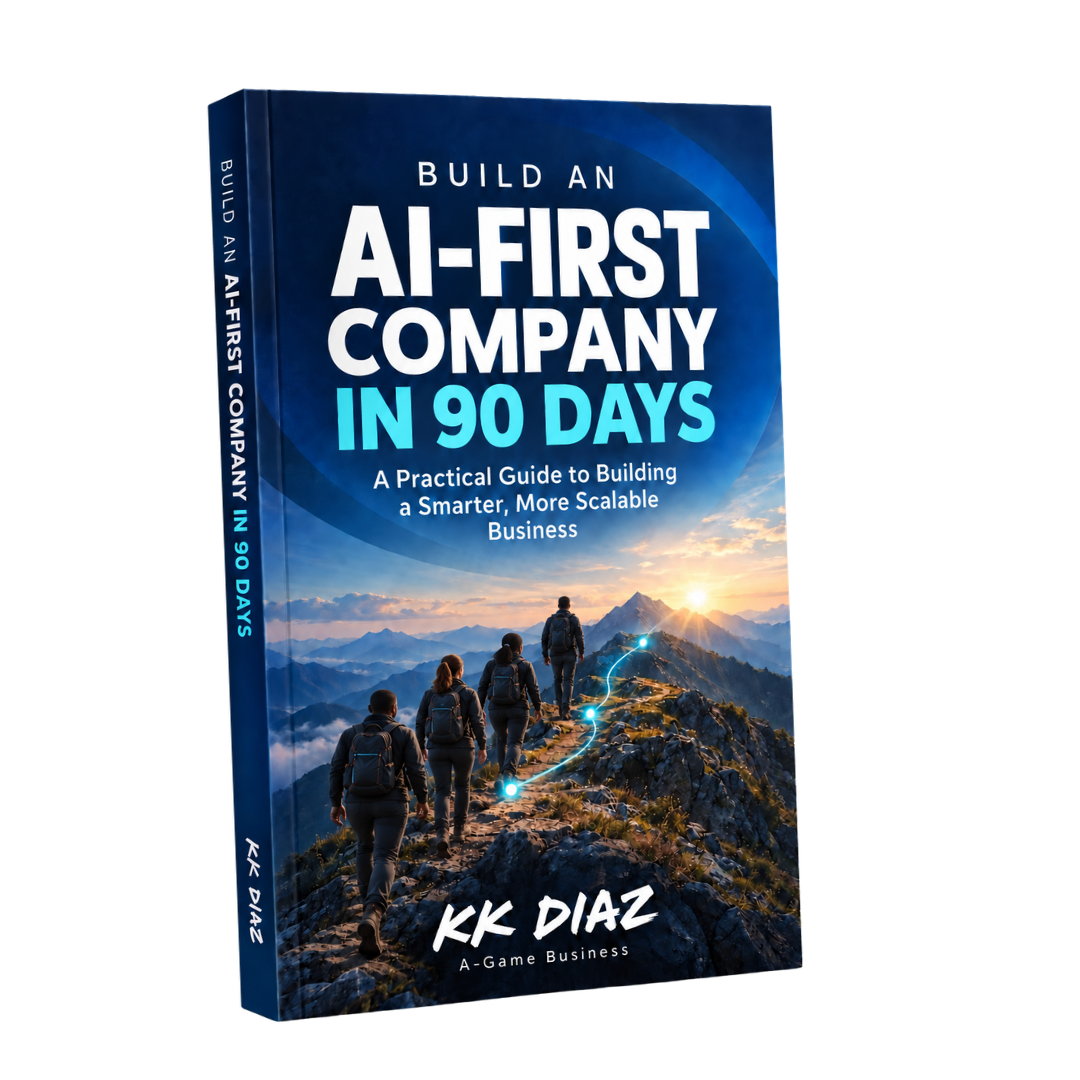
Lead the shift to an AI-first company
Read Build an AI-First Company in 90 Days for a practical framework to redesign work, decisions and leadership around human and AI capability.
Read the Book